The construction industry faces mounting pressure to stay compliant with ever-changing training regulations. From updates to the Construction Skills Certification Scheme (CSCS) to new health and safety requirements, keeping your workforce properly qualified has never been more critical. But here's something many contractors overlook: having a professional, well-structured website isn't just about marketing anymore it's become an essential tool for managing compliance, attracting qualified staff, and demonstrating your commitment to professional standards.
The construction sector has seen significant regulatory shifts over the past year. The Health and Safety Executive (HSE) has tightened enforcement around competency verification, whilst new apprenticeship standards have raised the bar for skill development across trades.
Key changes affecting construction businesses include revised CSCS card requirements for certain trades, updated Construction Industry Training Board (CITB) levy calculations, stricter site induction protocols, and enhanced continuing professional development (CPD) expectations for supervisors and managers. For many firms, particularly smaller contractors, keeping track of these shifting requirements feels like a full-time job in itself.
What's particularly challenging is that different projects may have varying compliance demands. A commercial build in London might require additional certifications compared to a residential extension in the Midlands. Clients are increasingly requesting documented evidence of training compliance before awarding contracts, and the days of a quick phone call confirming someone's qualifications are long gone.
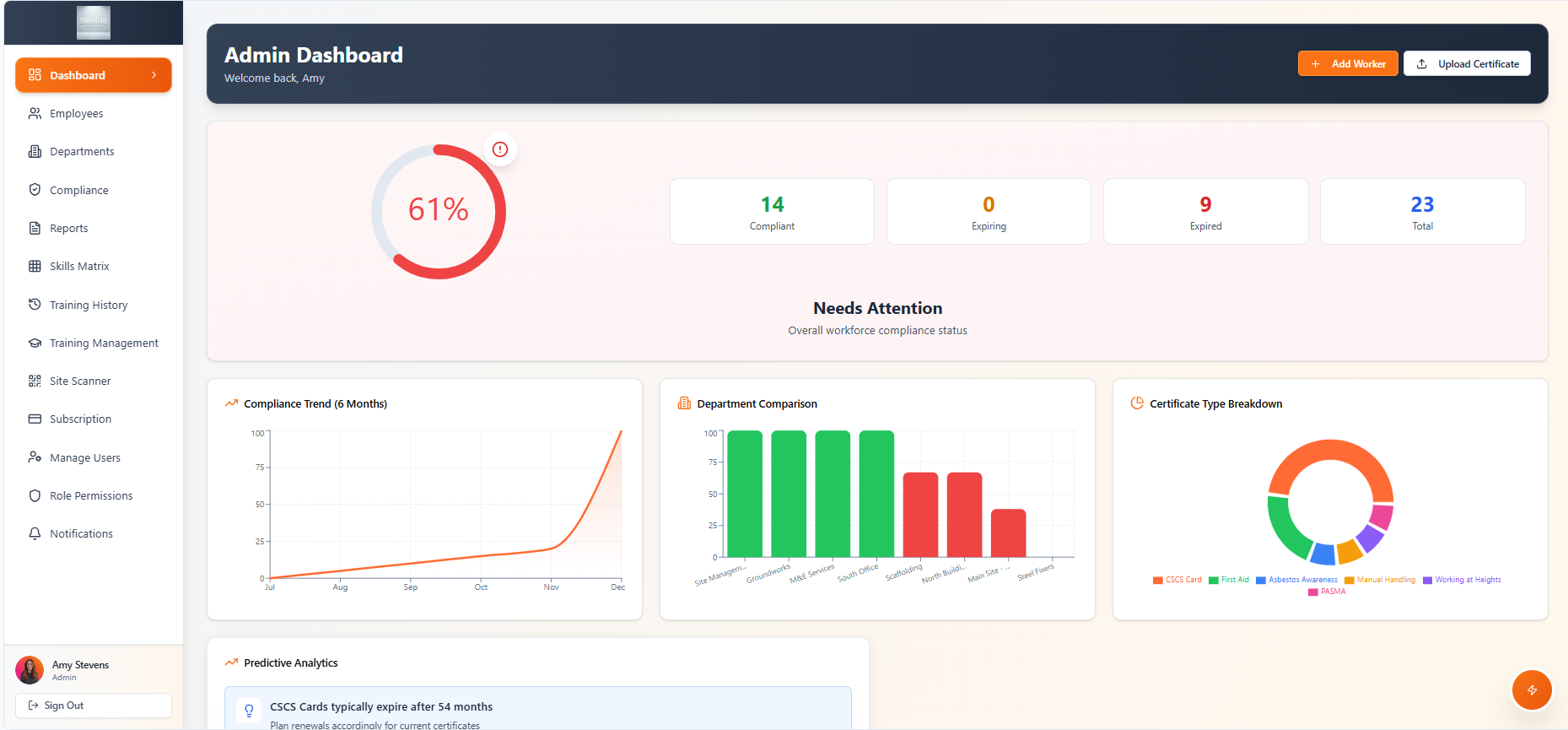
One of the biggest headaches facing construction businesses today is maintaining accessible, up-to-date records of training and certification. When a potential client asks for proof of your team's qualifications, how quickly can you provide it? When you're bidding for work, can you easily demonstrate that your workforce meets the project's specific requirements?
This is where a properly designed website becomes invaluable. Rather than scrambling through folders or outdated spreadsheets, a professional website can serve as a central hub for showcasing your team's credentials, certifications, and ongoing training commitments. It's not about putting sensitive information online it's about having a platform that demonstrates your professionalism and readiness to meet compliance standards.
A well-built website does more than look good; it actively helps you manage and communicate your compliance position. Consider these practical applications:
Your website can host a dedicated section displaying company accreditations, team qualifications, and industry memberships. When clients visit your site, they immediately see evidence of your commitment to professional standards. This isn't just about impressing potential clients it's about making it effortless for them to verify that you meet their compliance requirements.
Many contractors are now publishing their training policies and ongoing development programmes on their websites. This transparency reassures clients that you're not just meeting minimum requirements but actively investing in your workforce's skills. It also helps attract quality tradespeople who value employers committed to professional development.
With HSE scrutiny intensifying, having clear documentation of your health and safety policies and training protocols readily available online demonstrates proactive compliance. It shows you're not waiting for someone to ask you're putting your standards out there for all to see.
The construction industry faces a significant skills shortage, and competition for qualified tradespeople is fierce. Your website is often the first point of contact for potential employees researching your company. What impression does it give them?
A professional website that highlights your training programmes, career development opportunities, and commitment to keeping staff qualified sends a powerful message. Skilled workers want to work for employers who'll invest in their professional growth, not just use them until their cards expire. By showcasing your training initiatives and the pathways available within your company, you position yourself as an employer of choice rather than just another contractor.
Moreover, younger workers entering the trades are digital natives. They expect professional businesses to have a strong online presence. A poorly designed website or, worse, no website at all, suggests you're behind the times not an appealing trait in an industry that's rapidly modernising.
When contractors submit tender documents today, procurement teams increasingly conduct online research before making decisions. They'll Google your company name, visit your website, and look for evidence that you're a legitimate, professional operation. What will they find?
A robust website with clear information about your capabilities, qualifications, and past projects significantly strengthens your position. It's social proof in action. When a client can see your accreditations, read testimonials from previous projects, and understand your approach to quality and compliance, you're already halfway to winning the contract.
Think of your website as your digital shopfront. You wouldn't turn up to a client meeting in torn work clothes and muddy boots, so why present an amateur online image? In many cases, your website creates the first impression, and as the saying goes, you don't get a second chance at that.
Here's a reality that surprises many contractors: most construction projects begin with a Google search. Whether it's a homeowner looking for a builder or a commercial client seeking specialist contractors, the journey typically starts with phrases like "construction company near me" or "qualified electricians in Manchester".
Without a properly optimised website, you're invisible to these searches. Your competitors with professional sites are capturing these leads whilst you're relying solely on word-of-mouth referrals. That's not a sustainable growth strategy in 2026.
A well-structured website with relevant content about your services, locations, and qualifications helps you appear in these crucial local searches. When someone searches for construction services in your area, you want to be visible. Better yet, you want them to land on a site that immediately establishes your credibility and makes it easy for them to get in touch.
One often overlooked benefit of a professional website is internal accessibility. How many times have your site managers needed to quickly check a policy document or verify a certification status? How often do you need to email the same health and safety documents to different clients?
A well-organised website can include password-protected sections where your team can access important documents, training schedules, and compliance information. It becomes a centralised resource that saves time and reduces the risk of people working with outdated information. When training records are readily accessible online, renewing certifications before they expire becomes much easier to manage.
The Insurance and Legal Perspective
There's another angle worth considering: insurers and legal advisors increasingly favour contractors who demonstrate robust compliance systems. In the unfortunate event of an incident, having clear documentation of your training programmes, safety procedures, and qualification requirements readily available can be crucial.
A professional website that includes this information (in appropriate detail) shows you're not just paying lip service to compliance you're genuinely committed to it. Some insurers now offer preferential rates to contractors who can demonstrate such systematic approaches to managing risk and maintaining standards.
Looking ahead, the trend towards greater transparency and accountability in construction will only intensify. Digital verification of qualifications is becoming standard practice, and clients expect instant access to contractor credentials. Having a professional website positions you ahead of this curve rather than scrambling to catch up later.
The construction industry is professionalising rapidly, and contractors who embrace modern business practices including maintaining a strong digital presence will be better positioned to thrive. Those who resist change risk being left behind as clients increasingly favour contractors who demonstrate transparency, professionalism, and commitment to standards.
Key Features of an Effective Construction Website
Not all websites are created equal, and a generic template won't deliver the benefits we've discussed. An effective construction business website should include a clear services section detailing your capabilities and specialisms, accreditation and certification displays showing your industry memberships and qualifications, a portfolio showcasing completed projects with client testimonials, clear contact information making it easy for clients to reach you, mobile-friendly design ensuring the site works perfectly on phones and tablets, and fast loading speeds because slow sites lose visitors quickly.
The content should be written in plain English that your clients understand, avoiding jargon whilst still demonstrating technical expertise. Remember, your website serves multiple audiences: potential clients assessing your suitability, qualified tradespeople considering employment, and existing clients looking for information.
Many contractors baulk at investing in a professional website, seeing it as an unnecessary expense. But consider what you're losing without one. Every potential client who searches online and doesn't find you is a lost opportunity, every qualified tradesperson who checks you out and sees nothing professional is a missed hire, and every tender where you can't easily demonstrate your credentials puts you at a disadvantage.
In reality, not having a professional website costs you far more than having one. It's not about following fashion it's about remaining competitive in a digital age where first impressions increasingly happen online.
Training regulations will continue to evolve, and staying compliant will remain a significant challenge for construction businesses. But having the right tools including a professional, well-structured website makes managing compliance considerably easier whilst simultaneously opening doors to new opportunities.
Your website isn't just about looking professional; it's about being professional. It's about making life easier for your clients, your staff, and yourself. It's about demonstrating that you're a serious business operating to the highest standards.
The construction industry has changed dramatically over the past decade, and the pace of change isn't slowing down. Contractors who adapt and embrace modern business practices will be the ones who thrive. A brilliant website isn't a luxury anymore it's an essential tool for running a successful construction business in 2026 and beyond.
We’ve built 50+ websites for clients using Webflow, across a range of industries, from service led businesses to more complex, content driven platforms.
That experience means we’re not just designing pages, we’re building structured, scalable Webflow websites that perform well long after launch.
If you’d like to see how we approach Webflow projects in practice: